
by Lolo | Jan 23, 2017 | Love
A small reminder ..
The existence , the physical universe is basically playful.
There is no necessity for it whatsoever , it isn’t going anywhere .
It doesn’t have a destination that it ought to arrive at .
But it is best understood by analogy with music,
because music as an art form, is essentially playful.
We say you play the piano, you don’t ‘work ‘ the piano.
Why? Music differs from, say, travel,
when you travel you are trying to get somewhere.
In music , though, one doesn’t make the end of the composition,
if so, the best conductors would be those who played fastest.
And there would be composers who only wrote finales
people would go to a concert just to hear one crackling chord
because that is the end.
Same way with dancing , You don’t aim at a particular spot in the room
because that is where you will arrive.
The whole point of dancing is the dance!
But we don’t see that as something brought by our education
into our every day conduct.
We have a system of schooling which gives a completely different impression.
It is all graded and what we do is put the child into the corridor
of this grade system with a kind of come on get it !
And you go to kindergarten and that is a great thing because,
when you finish that you get into first grade.
And the come on first grade leads to second grade and so on.
And then you get out of grade school you got high school.
And it is revving up, the thing is coming, then you are going to go to College.
And then graduate school , and when you are through with graduate school,
you go out to join the world.
Then you get into some racket where you are selling insurance,
and they have got that quota to make , and you are gonna make that.
And all the time that “thing” is coming .
It is coming , it is coming . that great “thing”
The success you are working for.
Then when you wake up one day about 40 years old and you say:
My god , I have arrived , I am there. Here it is.
And you don’t feel very different from what you have always felt.
Look at the people who live to retire, to put those savings away.
And then when they are 65 they don’t have any energy left.
Because we simply cheated ourselves the whole way down the line.
We thought of life by analogy with a journey ,with a pilgrimage,
Which had a serious purpose at the end,
and the thing was to get to that end !
Success, or whatever it is, or maybe heaven after you are dead.
But we missed the point the whole way along…
It was a musical thing , and you were supposed to sing, or to dance.
While the music was being played….
Live now
LoveMeXXXX
by Lolo | Jan 22, 2017 | Love
Es Collera
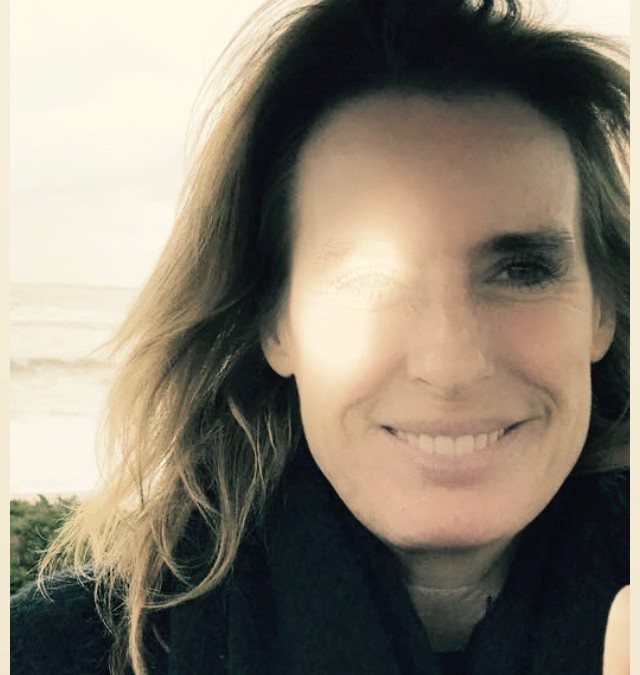
Caught by the light !
Ongoing rain keep on smiling.
Happy Sunday
Goodnight
LoveMeXXXX

by Lolo | Jan 21, 2017 | Love
Black Opium , Director’s cut ,
My heart is a jungle , my head obviously ..I know the song!
Jungles are good .
LoveMeXXXX

by Lolo | Jan 19, 2017 | Uncategorized
I tried to make something ,.something..don’t know yet
Yes Something ,.or so
Goodnight
LoveMeXXXX

by Lolo | Jan 15, 2017 | Uncategorized
How does the behaviour of collectors affect the market and the career of an artist?
I love this interview with Marta Gnyp, collector and art historian, we start to step into some of the art world’s taboos. Marta, with her wit and humour and openness, shares with us her acute observation on the market dynamics and the phenomenon of collectors’ rising power.
Talking about young artists, there are also collectors who support young emerging artists. It’s very positive for the collector’s image if they say, “I collect their works and help them to continue in their career.” Would you say this was also a key feature of being a good collector?
Absolutely. It is a feature of a good collector because it implies risk-taking, whereas someone who collects Warhol or Rudolf Stingel (*1956) doesn’t really take a risk. These artists have already made their names and command high prices, so their market is considered safe from the investment point of view, at the moment at least. The situation is completely different for younger artists because they can change their profession, lose their skills or simply disappear. We have seen many cases like this. So, if you are collecting emerging artists, you are simply taking risks.
However, there is something very specific about the notion of risk-taking in our current collecting scene. You are not taking any risks if you only buy works that you like, because you will own the work that you like and that’s enough. But by saying that you are “taking risks”, you are actually implying that there is more at stake than just buying beautiful works that you like. Very often it means that you want something to either stay valuable or increase in value.
Buying from very young artists is also very rewarding for collectors because if collectors grow themselves, then they will grow with the artists. This is one of the most relevant features of contemporary collecting. If you are lucky, or if you have a good eye, then you will find an artist who can grow very quickly. When we look at the careers of Mark Bradford (*1961, USA) or Mark Grotjahn (*1968, USA), we see that the prices went up 10 or 100 times over 15 years. A piece of theirs you bought 15 years ago for US$ 50,000 might be worth $ 1 million today. So, if you were interested in the artists early on, you could be a part of a really amazing shift in their careers.
These kinds of stories are very present and often told so they permanently feed the excitement of the art world and the perpetual need to collect. Almost everybody wants to be the one who finds the next Picasso.
We sometimes ask how the market functions, and if it’s possible to fabricate the market of an artist and make an artist successful commercially? Does talent still count? This is a very sensitive, yet interesting question. Have you made any observations from your research?
I analysed two artists in my book – Oscar Murillo (*1986, Colombia) and Phyllida Barlow (*1944, UK). They have completely different positions and are from two different backgrounds. One is 30 and the other is 72. I was very curious to know what makes an artist suddenly visible and desirable for so many collectors. Murillo and Barlow are two extreme cases, as both of them became very visible within a very short period of time. For this to happen, you need every actor in the art world to be mobilized for you.
Talent, skills, artistic vision and determination are of great importance but you need a whole constellation to make you visible in the first place. You need something to make the others believe in the quality of your art – and quality is something that is very problematic. You need people who perceive the quality and mediate it to the art world.
Murillo is a good example. He was suddenly discovered by a number of significant collectors, dealers, curators and gallerists, all at the same time. A gallery showed his work, then another one became interested, and another. A collector who saw the shows then said, “Wow, such energy, the energy of Basquiat!” and immediately, there was a relevant context for his art. Another dealer found Murillo’s work fantastic and gave him greater visibility, and a famous curator discovered him as well. Many people with tremendous authority liked his art, rumours started and people who buy with their ears began chasing his artwork. All of a sudden, everybody was interested in the artist.
About Marta Gnyp
Marta Gnyp is a Dutch art historian based in Berlin active as international art advisor, art journalist and art collector specialized in contemporary art. She recently published the book The Shift. Art and the Rise to Power of Contemporary Collectors based on her PHD research in the field of art history/art sociology and also started her own gallery GNYP in Berlin.
www.martagnyp.com
